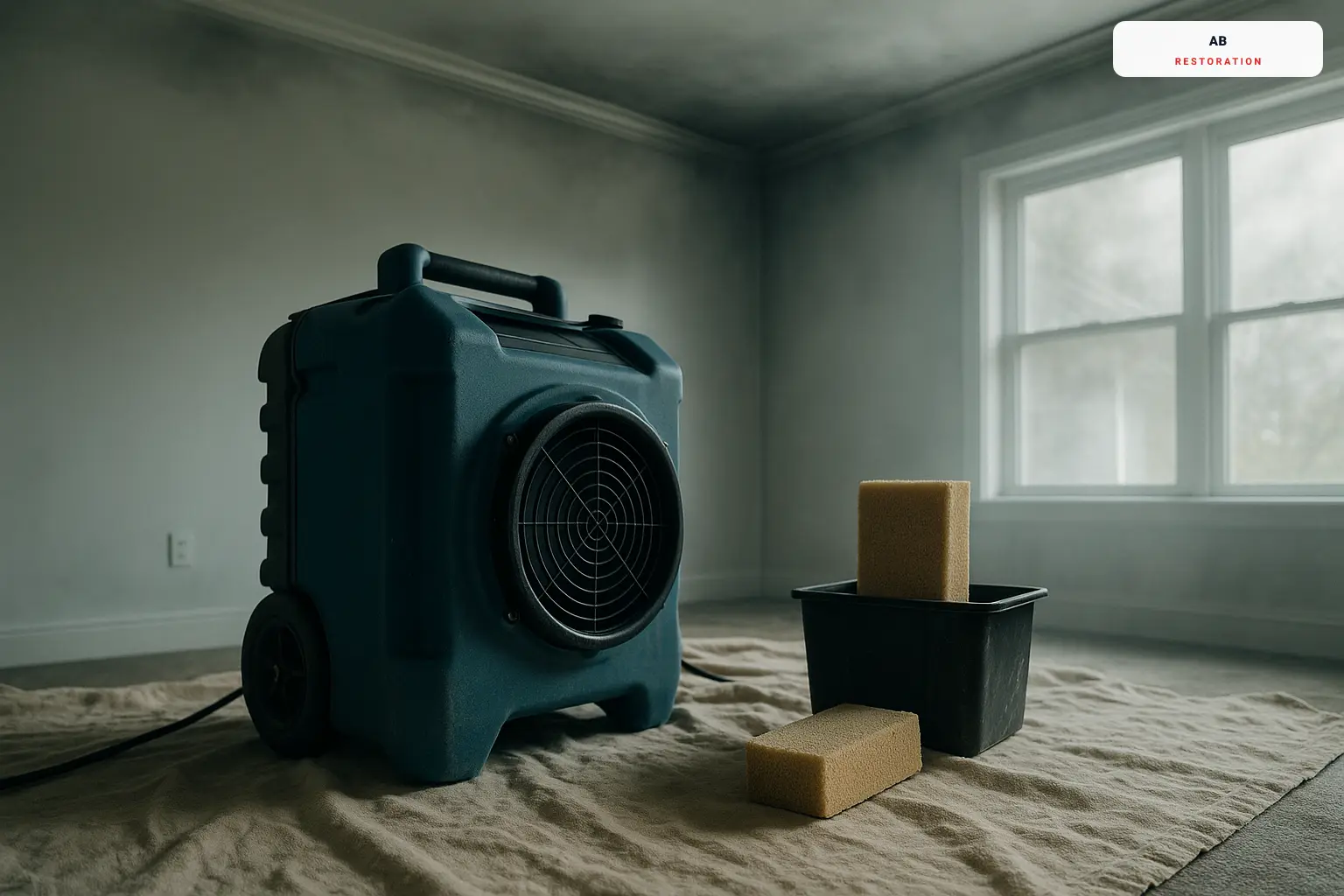
Containment + HEPA Filtration — Why the Plastic Sheeting Matters
If you walk into a mold remediation job and the contractor is not running HEPA-filtered negative-air containment, walk back out and call someone else. Disturbing mold growth releases millions of spores into the air. Without containment, those spores spread throughout the rest of the property — turning a contained 200 sqft mold problem into a whole-house contamination event.
Proper containment: 6-mil plastic sheeting + zip-wall framing creates a sealed barrier between the affected area and the rest of the structure. HEPA-filtered air scrubbers run inside the containment to capture airborne spores during the work. Negative-air pressure differential (containment is at lower pressure than the rest of the structure) means any air leakage flows INTO the containment rather than out. PPE for the techs: Tyvek suits, respirators with P100 cartridges, gloves, foot covers.
This setup adds equipment cost and labor time to a remediation job, which is why fly-by-night operators skip it. The cost difference shows up later — when the contamination has spread to areas it was not in before, and the second remediation is 3-5x the first.